RPR-FRA-003 · FRANCE
Tuileries Palace
6 October 1789: Versailles → Tuileries / 6 octobre 1789
Plan a visit
Exterior / grounds only — The Tuileries Garden is free to enter on its seasonal calendar. This is a garden and former-palace-site visit: the destroyed palace has no surviving interior route. Visitors must leave the garden before the published closing time; special events can change hours.
Booking: No garden admission ticket; museum tickets do not provide access to a Tuileries palace interior.
Official source / visitor information
Source review: 2026-10-12.
Royal / Imperial Palace
French name: Palais des Tuileries
Type: Royal / Imperial Palace
Dates: begun 1564; burned 1871; demolished 1883
Status: Lost
Provenance: Royal and imperial palace created for Catherine de' Medici and later joined to the Louvre
Geography
Geographic Path: France → Île-de-France → Paris → Louvre–Tuileries Axis
Local Place: 1st arrondissement / Seine axis
Estate / Micro-location: Louvre–Tuileries royal and imperial complex
Browse France Palace Geography →
Rulers, Residents & Use by Reign
| Period | Ruler | Relationship | Notes | Confidence |
|---|---|---|---|---|
| 1560–1574 | Charles IX | royal residence / court | Valois court used Paris and Fontainebleau residences. | High |
| 1574–1589 | Henry III | royal residence / court | Henri III's court used Blois and the Paris palace network. | High |
| 1589–1610 | Henry IV | royal residence / construction patron | Henri IV connected and enlarged the Paris and Saint-Germain palace networks. | High |
| 1610–1643 | Louis XIII | royal residence / patron | Louis XIII used the Louvre, Tuileries and Saint-Germain and founded the Versailles hunting lodge. | High |
| 1643–1682 | Louis XIV | royal residence before Versailles | Louis XIV's court moved among Saint-Germain, Vincennes, Louvre and Tuileries before 1682. | High |
| 1789–1792 | Louis XVI | principal Paris residence | The royal family lived at the Tuileries after leaving Versailles. | High |
| 1804–1814/1815 | Napoleon I | imperial residence / patron | First Empire residence network. | High |
| 1814–1824 | Louis XVIII | restored royal residence | Bourbon Restoration use. | High |
| 1824–1830 | Charles X | royal residence | Restoration palace network; Charles X abdicated at Rambouillet. | High |
| 1830–1848 | Louis-Philippe I | royal / dynastic residence | July Monarchy residence network. | High |
| 1852–1870 | Napoleon III | imperial residence / patron | Second Empire court and state-residence network. | High |
Useful Links
Can You Visit?
Access status: exterior_only
Palace lost; the Tuileries Garden survives as public landscape, but the palace itself no longer exists.
Visitor Statistics
No reliable annual figures have been entered yet.
Important Interiors
For the latest access review, see Plan Your Visit above.
Palace Profile & Official Website
Tuileries Palace is recorded as Royal / Imperial Palace. Location: Paris. Royal and imperial palace created for Catherine de' Medici and later joined to the Louvre
Summary from the existing catalogue; the historical description has not been fully re-audited in this release.
Official source / visitor information
Access: The Tuileries Garden is free to enter on its seasonal calendar. This is a garden and former-palace-site visit: the destroyed palace has no surviving interior route. Visitors must leave the garden before the published closing time; special events can change hours.
Sources
- The Tuileries Garden — From Royal Garden to Public Park
- The Grande Galerie
- Tuileries Garden — Louvre visitor information
Annual Visitor Statistics
No verified annual attendance figures have been entered. This does not mean zero visitors or that no statistics exist.
Historical illustration
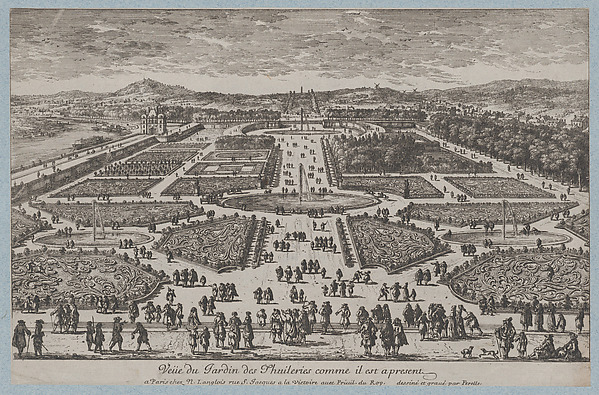
Adam Perelle · 1680. Historical view of the Tuileries Garden, 1680. This illustrates the palace landscape, not a surviving palace interior.
The Metropolitan Museum of Art, 51.644.320; Gift of the Estate of Ogden Codman, 1951. Collection record · CC0.
Historical illustration
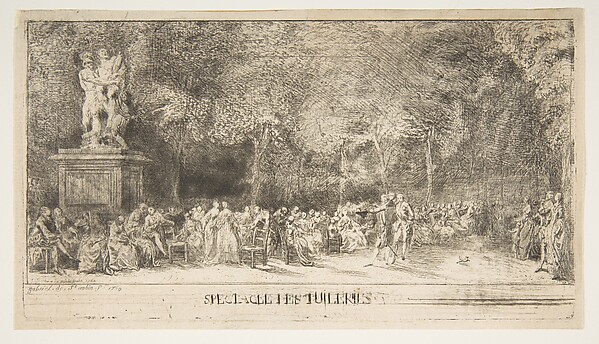
Gabriel de Saint-Aubin · 1760. Garden visitors and chairs in 1760. A scene of social life in the Tuileries gardens, not an architectural survey of the palace.
The Metropolitan Museum of Art, 18.21.1; Rogers Fund, 1918. Collection record · CC0.